

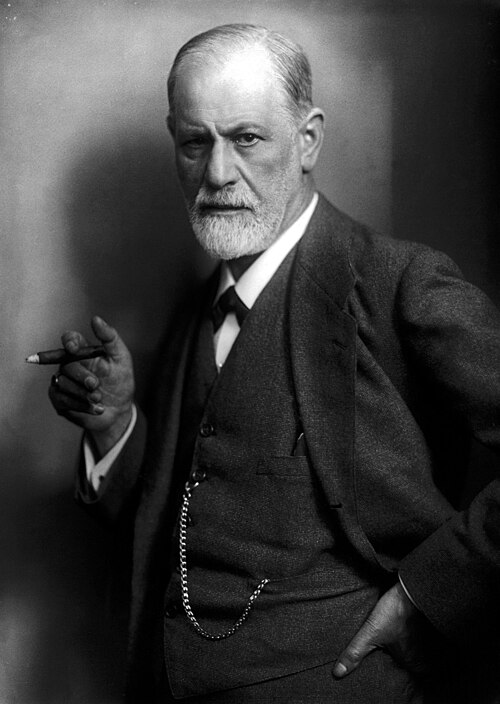
Freud, Sigmund
Early Life
Sigmund Freud was born on the 6th May 1856 in Freiberg, Moravia, which is known today as Pribor in the Czech Republic, before moving to Vienna where he spent the majority of his life. Freud was the first-born child of eight children to parents Jakob and Amalia. Freud’s father worked as a wool merchant, and whilst the family was Jewish, Freud himself did not hold strong Jewish beliefs.
Early Career
Freud studied medicine at the University of Vienna, which is where his interest in neurology developed. Initially, Freud spent time researching the nervous system in a physiological laboratory before leaving to work at the Vienna General Hospital where he became involved in the clinical treatment of psychological disorders using hypnosis. This work contributed greatly to the development of Freud’s famous psychodynamic approach to psychology and the psychoanalytic methods he would use in his research, for example dream analysis. In 1886, Freud set up his own clinical practice specialising in psychological disorders and married Martha Bernays, who he went on to have six children with.
Famous Works
Freud became well-known for his work into behaviour and personality being influenced by the unconscious mind, where he suggested that human’s store their repressed memories and desires. One of his more famous theories includes the Oedipus complex, which he began developing in 1899 and later supported this theory using his 1909 research exploring Little Hans' dreams, a boy who Freud believed had an unconscious sexual desire for his own mother. This theory was first mentioned in his second major publication titled The Interpretation of Dreams (1900), which paired with his later book The Ego and the Id (1923), have become some of the most influential pieces of work in the field of psychology, despite Freud also having many critics who refute his theories.
Later Life
In 1902, Freud became a neuropathology professor at the University of Vienna where he continued his research into neuropathology, before leaving this post and moving to England in 1938 following the Nazi occupation of Austria. Freud eventually died of oral cancer aged 83 on the 23rd September 1939.
© ZigZag Education 2026: content may be used by students for educational use if this page is referenced.
Show / hide details
| 1856 |
Born
|
|
| 1859 |
The family moved to Leipzig
|
|
| 1860 |
The family settled in Vienna
|
|
| 1873 |
Enrolled at the University of Vienna
|
|
| 1876-1882 |
Worked in the physiology laboratory
|
|
| 1877 |
Legally changed his name
|
|
| 1879-1880 |
Mandatory military service
|
|
| 1881 |
Graduated the University of Vienna
|
|
| 1882 |
Started work the Vienna General Hospital
|
|
| 1885 |
Studied in Paris
|
|
| 1886 |
Set up his own clinical practice
|
|
| 1886 |
Married Martha Bernays
|
|
| 1895 |
Freud published Studies on Hysteria
|
|
| 1900 |
Freud published The Interpretation of Dreams
|
|
| 1902 |
Appointed Professor of Neuropathology
|
|
| 1909 |
Little Hans
|
|
| 1923 |
Publication of The Ego and the Id
|
|
| 1938 |
Freud moved to England
|
|
| 1939 |
Death
|
About the Contributor
Sophie Allan

A precise and comprehensive diagnostic tool!
Reveal students strengths and weaknesses for every compulsory topic (1-8) of the AQA A level Psychology specification.
4–8 thoughtfully structured tests, each gradually increasing in difficulty. From simple recall, targeting key points, to multi-part questions requiring greater initiative to finally longer inferential-style questions.
Varied question styles through Case Studies, tables, images, or graphs, maximise engagement and formats expected in the exams.
Questions include many real-life applications to link theory and practice.
Data sets offer a practical means to assess students' data interpretation skills.
Dual formats: write-on and re-useable non-write on.
Efficient Assessment: Tests take just 45-60 minutes each!
Use in-class, for revision or as homeworks!
Comprehensive answers with mark allocations for effective peer- and self-assessment.

Up to 20 stand-alone homework sheets with up to 40 activities covering the A Level AQA Psychology topics. Ready-to-use and easy-to-set, write-on homework sheets, with answers included.
These homeworks provide a variety of questions, tasks & activities to help understanding of the topic, develop key exam skills & cover all assessment objectives.
Varied and interesting activities to engage students – includes case study evaluation, match-ups, gap-fills and more!
Exam-style activities for AS and A Level – co-teachable and brilliant for revision.
Mastermind tasks challenge the most able – make differentiation easy.
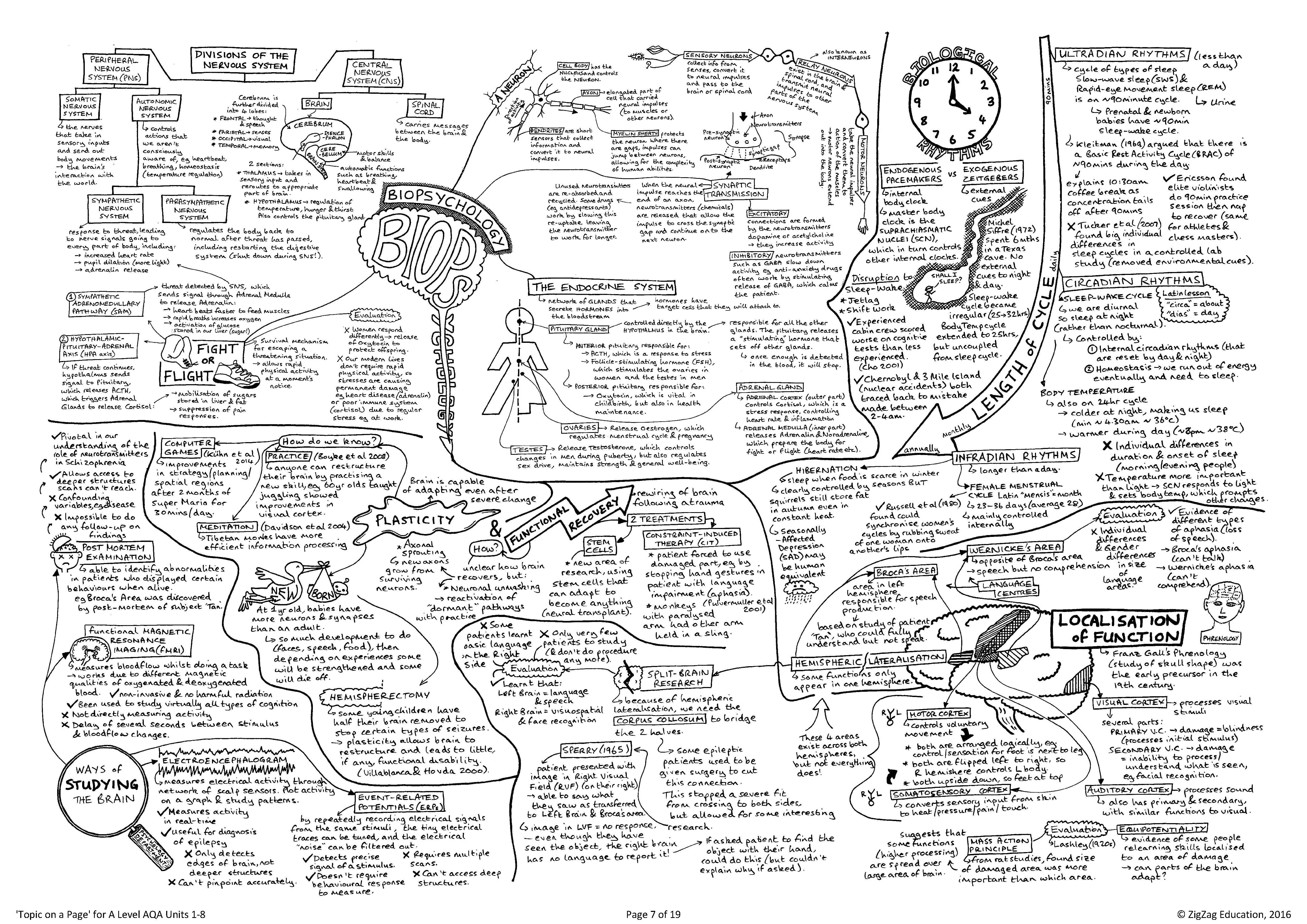
Visually engaging A3 posters with concise, easy-to-learn summaries of all eight compulsory topics of the AQA A Level specification. Help students see the bigger picture on an entire topic.
Included for each of the topics:
A3 Summary Poster giving at-a-glance overview
Partially complete A3 Activity Poster to test knowledge and challenge high-ability learners
All beautifully hand-illustrated by an experienced Psychology teacher!
Essential facts, vivid diagrams, and engaging cartoons illuminate key concepts
Include all vital vocabulary, theories, research, and critiques aligned with the AQA spec.
Consolidate and extend learning in class with these short and stimulating activities for the AQA A Level Psychology specification.
24–38 write-on, topic-specific activities from memory-recall experiments for Memory to brain and neuron annotation tasks for Biopsychology. Carefully designed with a strong focus on classroom learning and exam preparation.
Keep students on the right track in AQA A-Level Psychology with these clear and comprehensive course notes. Written in a student-friendly language and organised in specification order, including:
Versatile resource: use either as teaching notes, as an alternative to the textbook or as topic handouts, or upgrade to editable Word version to adapt for your pupils’ specific needs.
Clear learning outcomes at the start of each chapter for focused work
Accessible notes – at an appropriate level and in sufficient depth – ensuring clear explanations of core concepts
Integrated tasks stimulate students interest!
Thought-provoking visual images and diagrams to stimulate all learners
PLUS! End-of-topic consolidation questions test and assess students’ knowledge!
Acknowledgements
Public Domain image from https://commons.wikimedia.org/wiki/File:Sigmund_Freud_LIFE.jpg