

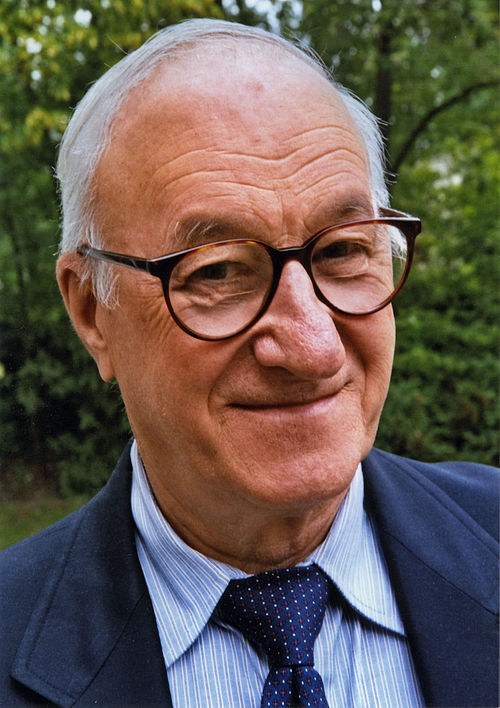
Bandura, Albert
Albert Bandura was born on 4th December in 1925 in Alberta, Canada where he was the youngest of six children. He grew up in a rural community where the opportunities for education were limited and very basic. As a result, Bandura took to teaching himself independently and was motivated to continue his education outside of his small community.
After graduating high school in 1946, Bandura enrolled at the University of British Colombia where he originally began studying biological sciences. During his time at university, Bandura took extra classes on a morning, which is where he discovered psychology and from that moment onwards he had found his career. Bandura excelled academically, and received the Bolocan Award for his outstanding work when he graduated in 1949. Bandura went on to complete his maters and Ph.D. in clinical psychology at the University of Iowa before taking on a yearlong instructorship at Stanford University and eventually becoming a full-time professor there. It was at Stanford that Bandura conducted his famous Bobo Doll study.
In 1961 Bandura, along with two of his colleagues, conducted an experiment involving a Bobo doll exploring how aggressive behaviour is learnt and modelled in children. His study found that children were more likely to exhibit aggressive behaviour towards the doll after being exposed to an adult role modelling displaying aggressive behaviour than children who had not been exposed to aggressive behaviour. This research provided the foundation for Bandura’s Social Learning Theory – the idea that people learn through observation and imitation. This theory has had a significant amount of influence and practical applications, particularly as at the time it was published the Vietnam War was televised on many news channels, and this research highlighted the negative impact this may have on children. This is especially important when considering that before Bandura’s research, the common assumption was that consuming violent media actually acted as a relief for aggression and therefore would reduce the amount of aggressive behaviours people display. In fact, Bandura testified against televised violence before Capitol Hill, and became a prominent figure in restricting the amount of violence children are exposed to.
Bandura published Aggression: A Social Learning Analysis in 1973 and became chairman of the psychology department at Stanford University in 1976. The following year, Bandura published his book Social Learning Theory, one of the most influential pieces of work in psychology and human behaviour. Along with social learning theory, Bandura was well known for his work into self-efficacy, and how our perceptions and attitudes about ourselves influence our behaviour and thoughts, as well as our opinions of others. This was a huge milestone in understanding why people might justify committing immoral or criminal acts. Bandura achieved many awards throughout his long career, and in 2004 he was awarded the American Psychological Association award for Outstanding Lifetime Contribution to Psychology, and in 2016 he received the National Medal of Science.
Albert Bandura died on 26th July, 2021, and until his death he held the title of most cited living psychologist for his many published works.
© ZigZag Education 2026: content may be used by students for educational use if this page is referenced.
Show / hide details
| 1925 |
Birth
|
|
| 1946 |
Graduated high school |
|
| 1946 |
Enrolled at The University of British Colombia
|
|
| 1949 |
Graduated university
|
|
| 1951 |
Gained his masters from the University of Iowa |
|
| 1952 |
Gained his doctorate in clinical psychology from the University of Iowa |
|
| 1953 |
Began an instructorship at Stanford University
|
|
| 1959 |
Published Adolescent Aggression |
|
| 1961 |
Bobo doll experiment
|
|
| Late 1960s |
Restricted televised violence
|
|
| 1973 |
Published Aggression: A Social Learning Analysis |
|
| 1974 |
Became president of the American Psychological Association |
|
| 1976 |
Became chairman of the psychology department at Stanford University |
|
| 1977 |
Published his book Social Learning Theory
|
|
| 1980 |
Became a fellow of the American Academy of Arts and Sciences (AAAS) |
|
| 1986 |
Created Social Cognitive Theory |
|
| 2004 |
Awarded the APA award for Outstanding Lifetime Contribution to Psychology |
|
| 2006 |
Recipient of the Gold Medal Award for Life Achievement in the Science of Psychology |
|
| 2008 |
University of Louisville Grawemeyer Award for his contributions to psychology |
|
| 2016 |
Awarded the National Medal of Science |
|
| 2021 |
Death
|
About the Contributor
Sophie Allan
30–47 ready-to-use activities fully aligned to the specification and assessment criteria, covering all of Unit 1: Children’s Development and Unit 3: Play and Learning.

Up to 20 stand-alone homework sheets with up to 40 activities covering the A Level AQA Psychology topics. Ready-to-use and easy-to-set, write-on homework sheets, with answers included.
These homeworks provide a variety of questions, tasks & activities to help understanding of the topic, develop key exam skills & cover all assessment objectives.
Varied and interesting activities to engage students – includes case study evaluation, match-ups, gap-fills and more!
Exam-style activities for AS and A Level – co-teachable and brilliant for revision.
Mastermind tasks challenge the most able – make differentiation easy.
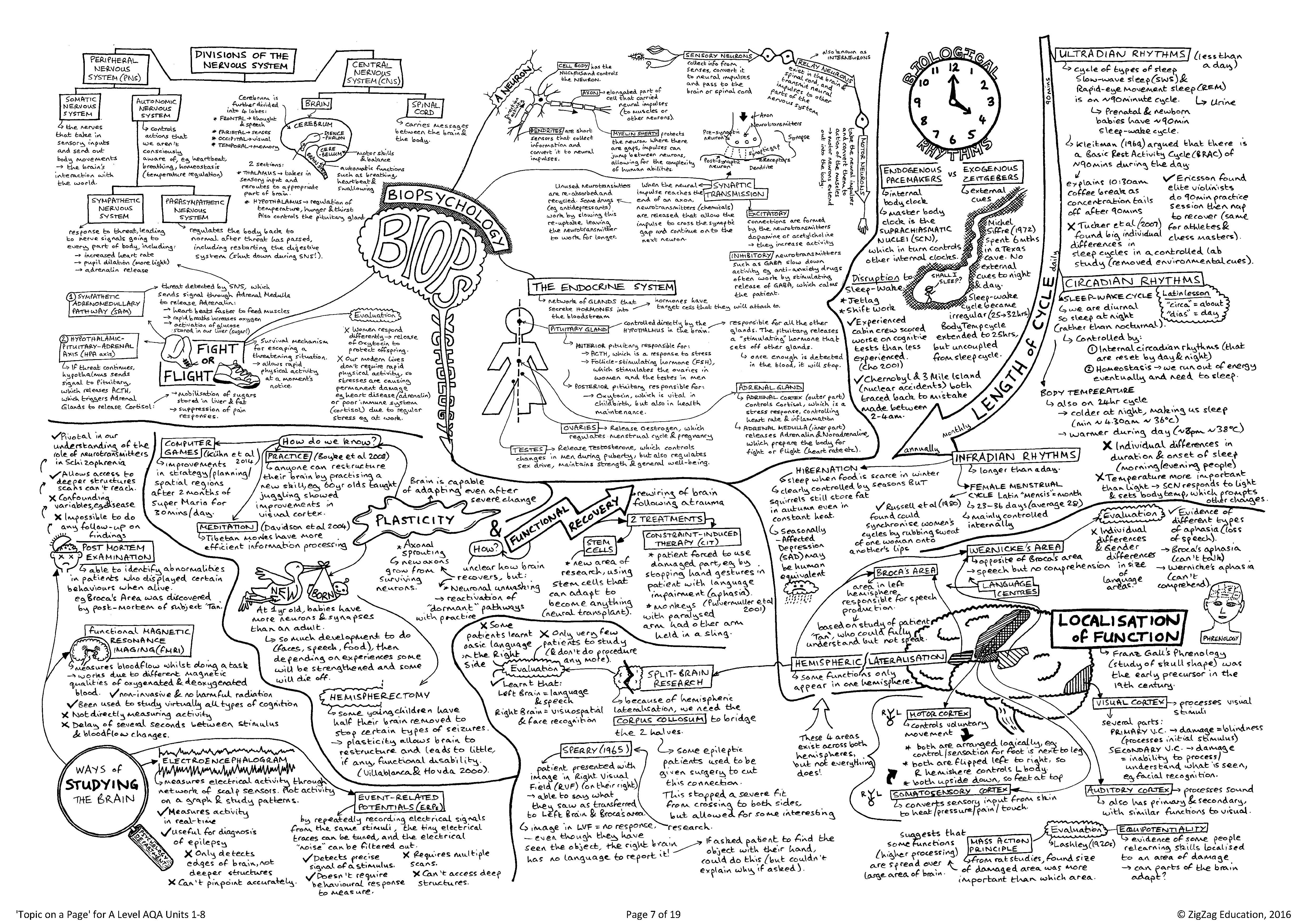
Visually engaging A3 posters with concise, easy-to-learn summaries of all eight compulsory topics of the AQA A Level specification. Help students see the bigger picture on an entire topic.
Included for each of the topics:
A3 Summary Poster giving at-a-glance overview
Partially complete A3 Activity Poster to test knowledge and challenge high-ability learners
All beautifully hand-illustrated by an experienced Psychology teacher!
Essential facts, vivid diagrams, and engaging cartoons illuminate key concepts.
Include all vital vocabulary, theories, research, and critiques aligned with the AQA spec.

Consolidate and extend learning in class with these short and stimulating activities for the AQA A Level Psychology specification.
24–38 write-on, topic-specific activities from memory-recall experiments for Memory to brain and neuron annotation tasks for Biopsychology. Carefully designed with a strong focus on classroom learning and exam preparation.
Perfect mixture of activities motivates and enthuses all learning styles.
Excellently matched to Assessment Objectives.
Ideal blend of individual, paired, small-group and whole-class activities develops independent and cooperative learning methods.
Keep students on the right track in AQA A-Level Psychology with these clear and comprehensive course notes. Written in a student-friendly language and organised in specification order, including:
Versatile resource: use either as teaching notes, as an alternative to the textbook or as topic handouts, or upgrade to editable Word version to adapt for your pupils’ specific needs.
Clear learning outcomes at the start of each chapter for focused work.
Accessible notes – at an appropriate level and in sufficient depth – ensuring clear explanations of core concepts
Integrated tasks stimulate students interest!
Thought-provoking visual images and diagrams to stimulate all learners.
PLUS! End-of-topic consolidation questions test and assess students’ knowledge!
Acknowledgements
Creative Commons Attribution-Share Alike 4.0 International license.
https://commons.wikimedia.org/wiki/File:Albert_Bandura_Psychologist.jpg
